Recorded Webinars
Explore our collection of live and recorded webinars designed to support outreach, engagement, and community partnership work across the region.
Webinar Series: Provost’s Awards for Excellence in Community Engaged Scholarship
Through inspiring conversations, awardees will share insights into their community partnerships, innovative approaches to engaged scholarship, and the real-world impact of their work. Whether you’re an educator, student, community member, or engagement professional, these sessions offer a unique opportunity to discover how UConn continues to advance its land-grant mission and strengthen its commitment to the public good.
Cristina Colon-Semenza: 2025 Emerging Faculty Community Impact Award
March 26, 2026, at 12 PM
Registration link: https://uconn-cmr.webex.com/weblink/register/r3b9fd3c614ac6e4c040996ffd05400d7
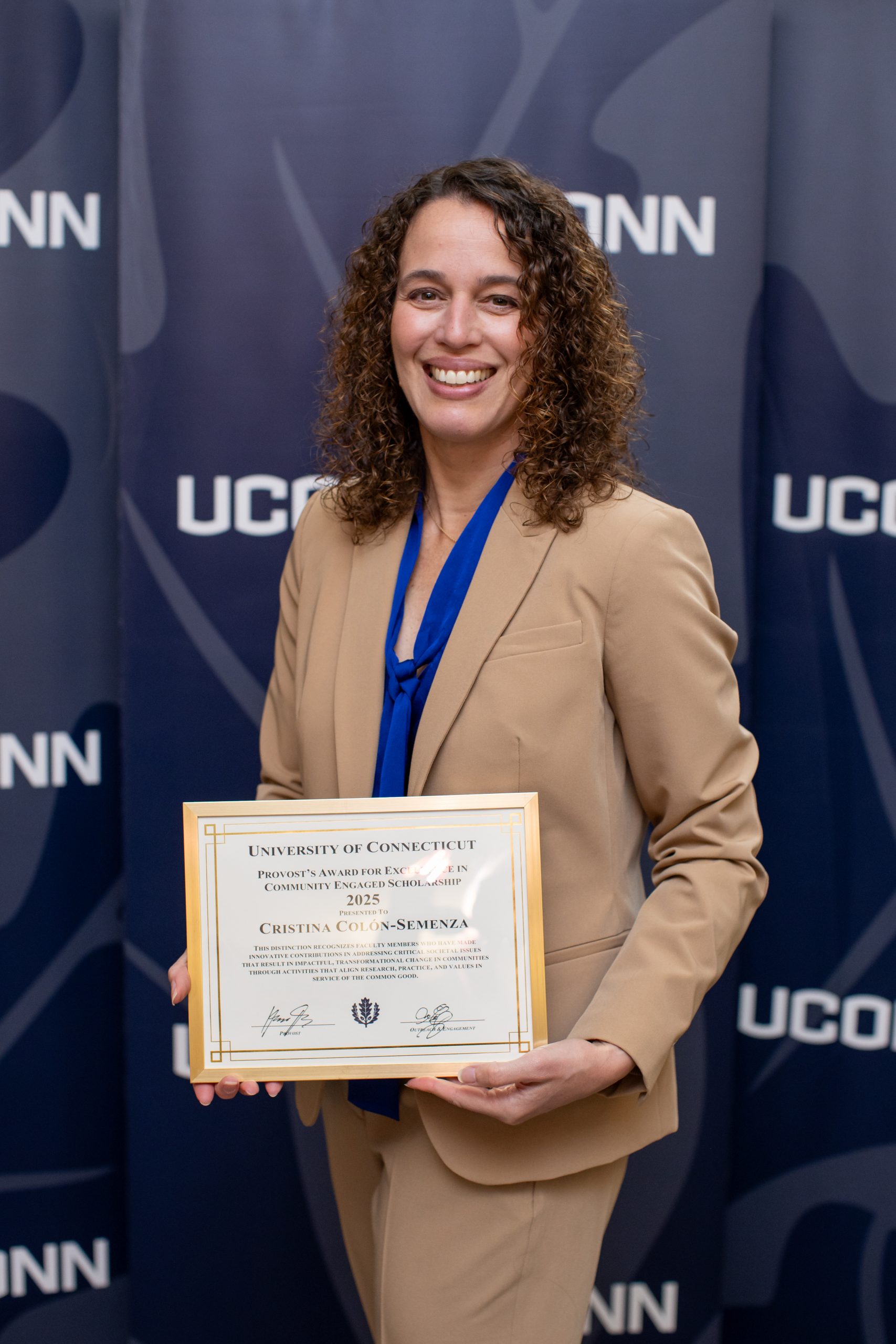
Cristina Colón-Semenza is an emerging leader whose work blends research, education, and community engagement to improve the lives of people living with Parkinson’s disease.
Recognizing that exercise can dramatically slow disease progression but is often inaccessible,
Professor Colón-Semenza created the UConn Parkinson’s disease exercise class, a weekly, community-based program that supports long-term physical activity and social connection. What began as a small initiative has grown into a thriving community impacting nearly 100 individuals with Parkinson’s disease and their care partners, with 100% of participants reporting improved physical activity, health, and social connection.
Her program also provides powerful experiential learning for UConn students, training future clinicians through hands-on engagement with people living with Parkinson’s disease. These community partnerships have directly inspired impactful research, including studies showing a 42% increase in high-intensity physical activity through peer support
Native American and Indigenous Studies: 2025 Faculty Award
March 12, 2026, at 12 PM
Recording
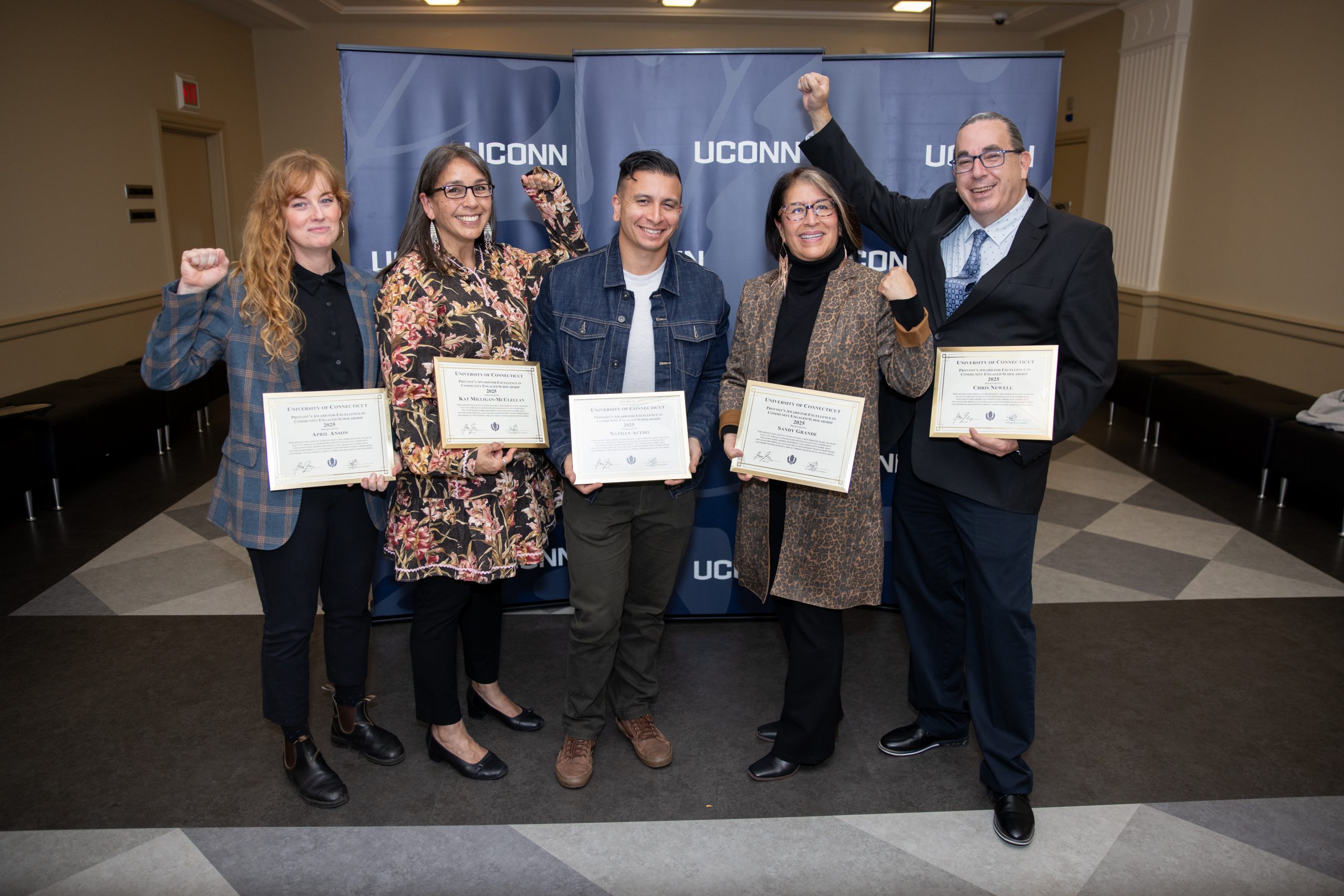
The Native American and Indigenous Studies faculty team: Sandy Grande, Kat Milligan-McClellan, Nate Acebo, Chris Newell, Hana Maruyama, April Anson, Josh Mayer, Bruno Seraphin, and Kali Simmons—leaders of UConn’s transformative Tribal Education Initiative (TEI).
Born from student advocacy and grounded in partnership with Connecticut’s Tribal Nations, the TEI reimagines the relationship between a land-grant university and Indigenous communities. Through institutional change, community collaboration, and innovative programming, the NAIS faculty have built a sustainable framework for reciprocal engagement, Indigenous leadership, and educational justice.
Their work includes strengthening partnerships with the five Tribal Nations in Connecticut, supporting the growth of the Federally Recognized Tribes Extension Program, advancing Indigenous-centered curriculum, launching initiatives such as IndigiPalooza! and #IndigiReads, and expanding Native student support programs.
Kamal Gautam: 2025 Graduate Award
March 5, 2026, at 12 PM
Recording
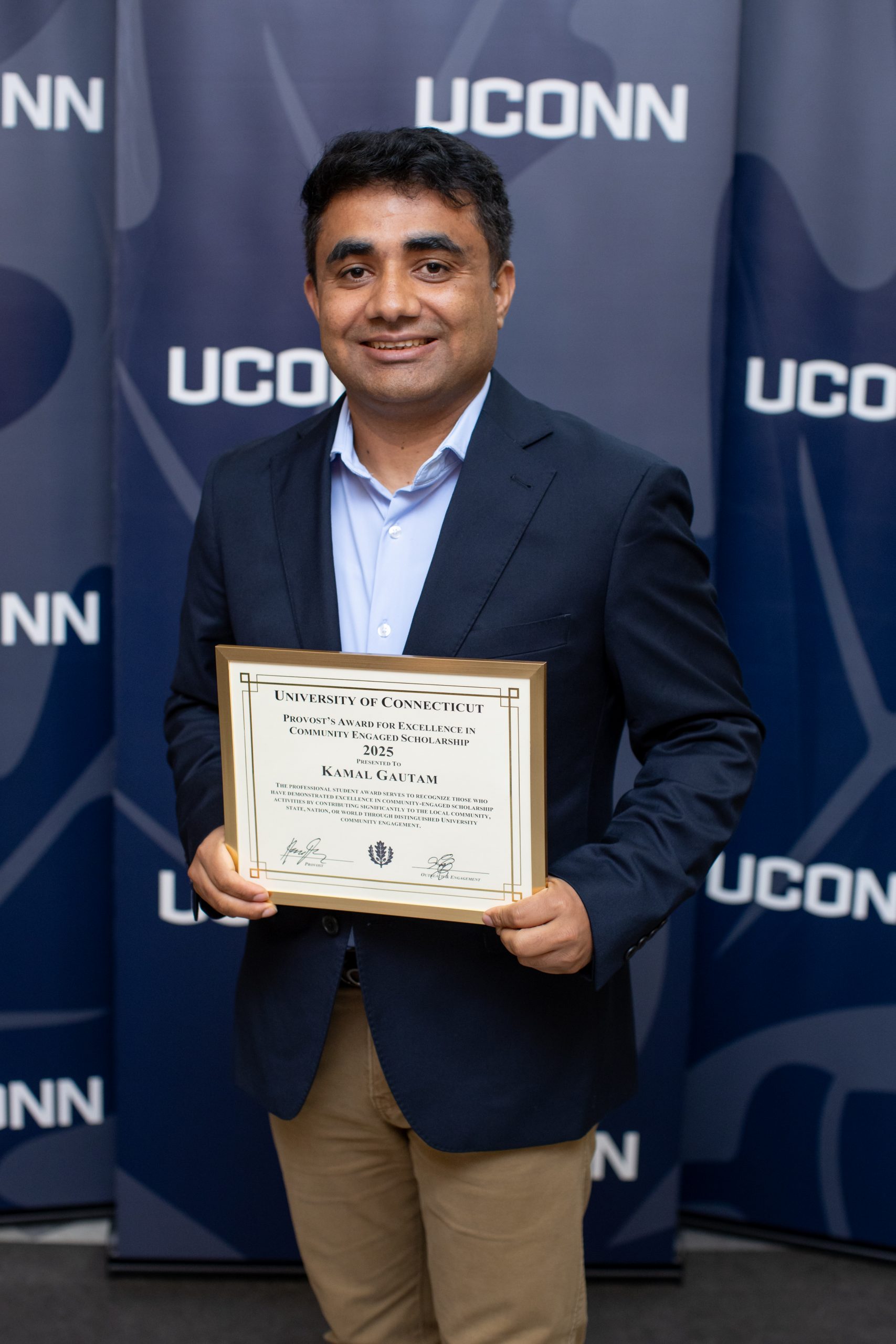
As a Graduate Research Assistant, Kamal plays a leading role in coordinating NIH-funded projects in the U.S., Nepal, and Malaysia, focusing on HIV prevention among men who have sex with men, transgender women, and people who inject drugs. His work integrates mHealth innovation, participatory research methods, and mental health equity, ensuring that marginalized communities are partners at every stage of the research process.
Since 2022, Kamal has first-authored six publications, co-authored more than 20 manuscripts, and presented internationally at the International AIDS Conference and the Society of Behavioral Medicine. He also leads mentorship efforts for undergraduate students and research staff, strengthening the next generation of public health leaders.
Milagros Marrero-Johnson: 2025 Distinguished Staff Award
February 19, 2026, at 12 PM
Recording:
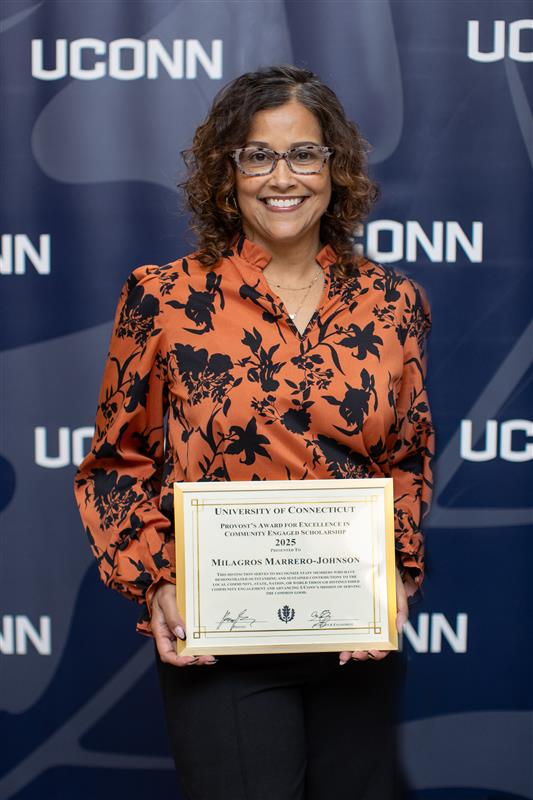
Milagros Marrero-Johnson is a visionary leader whose work bridges higher education, community partnerships, and equity-driven workforce development. For more than 20 years, she has been a powerful force connecting UConn’s School of Social Work with communities across Connecticut.
Ms. Marrero-Johnson has led and managed multi-million-dollar state and federal initiatives, including a $3.1M U.S. Department of Education grant supporting school social work and youth behavioral health in Hartford, New Britain, Vernon, and Waterbury. Her work ensures that students gain real-world experience while strengthening services for children and families.
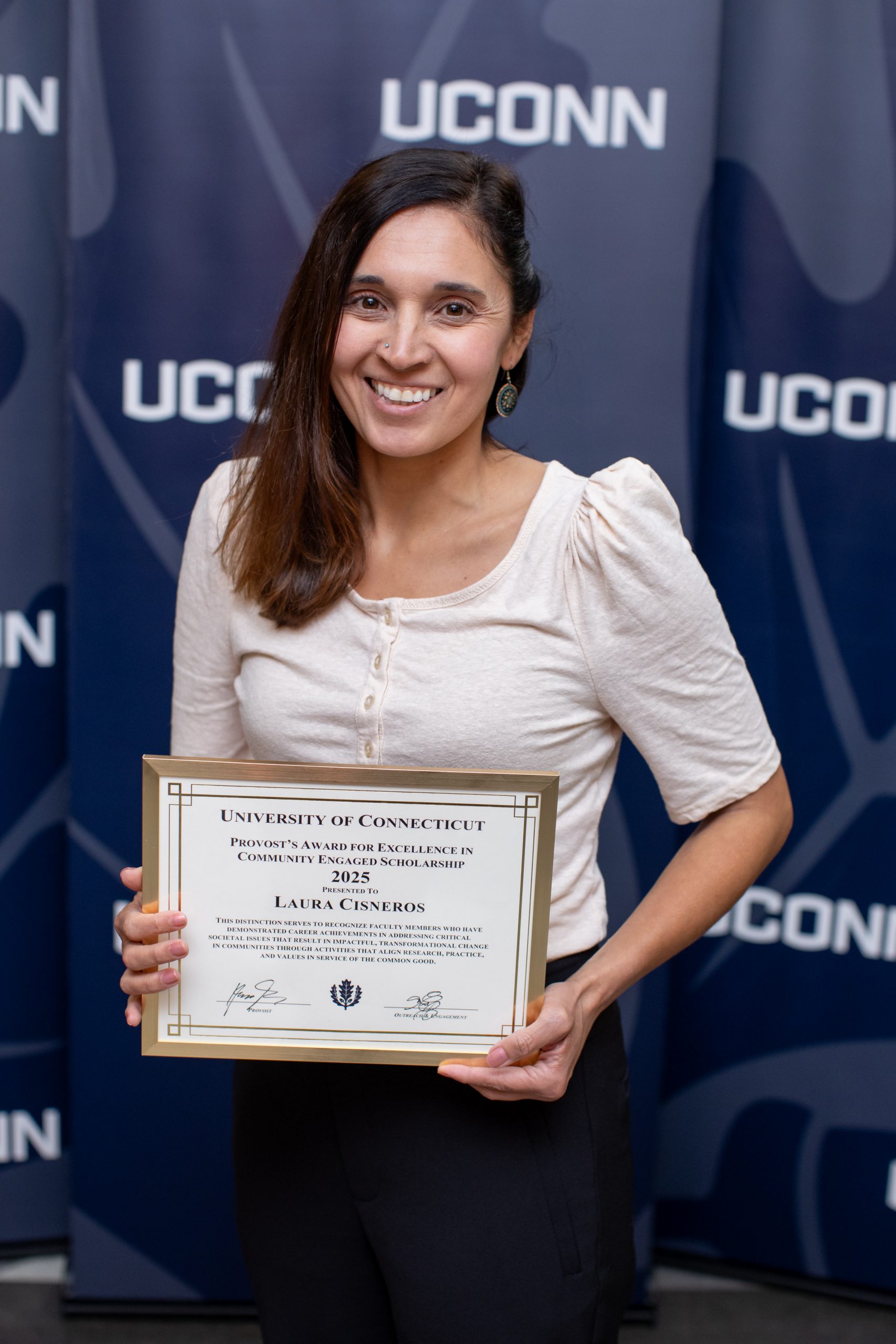
Laura Cisneros: 2025 Distinguished Faculty Community Impact Award
February 12, 2026, at 12 PM
Recording
Professor Cisneros is a leader in community-centered environmental education and the Director of the Natural Resources Conservation Academy (NRCA). Her work redefines how science connects with communities, making it accessible, inclusive, and action-driven.
Under Professor Cisneros’s leadership, the NRCA has supported more than 200 environmental action projects across 125 Connecticut towns, engaging more than 570 participants—including teens, educators, volunteers, and undergraduate mentors. These programs empower communities to take meaningful action while cultivating the next generation of environmental leaders.
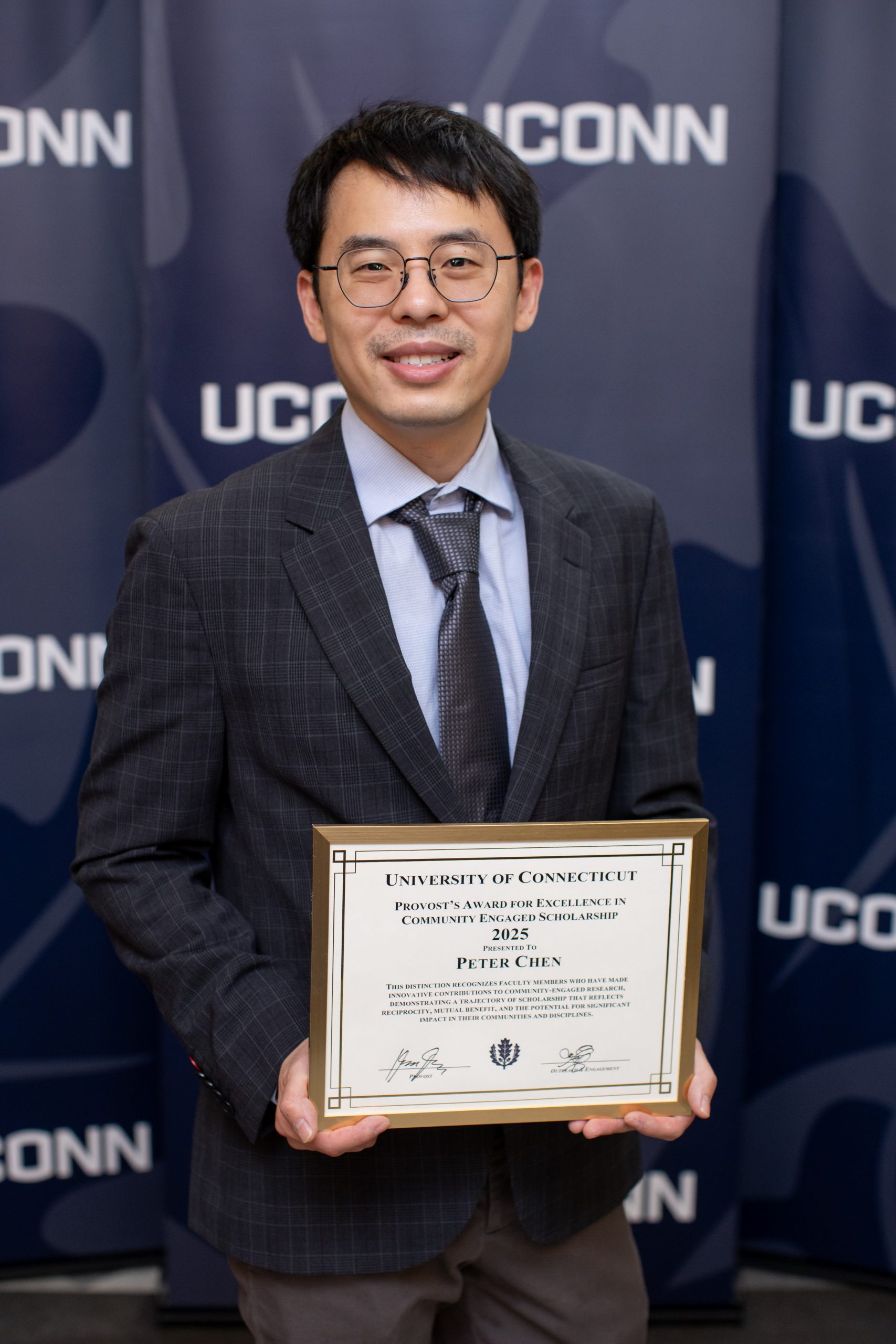
Peter Chen: 2025 Emerging Faculty Research Award
February 5, 2026, at 12 PM
Recording
Professor Chen’s work examines how food environments, transportation, and socioeconomic factors shape health outcomes across the U.S. He is the creator of the Retail Food Activity Index (RFAI)—a groundbreaking, GPS-based measure of food access published in Nature Communications, and a leader in town-level COVID-19 forecasting that supported local public health decision-making.
Professor Peter Chen is an award-winning scholar whose research uses cutting-edge geospatial methods to advance health equity and food access in underserved communities.
With 64 peer-reviewed publications, major federal and state-funded projects, and deep community partnerships, Professor Chen translates data into real-world impact, from food access tools to policy-relevant dashboards
Navigating IRB and Community-Engaged Research
Wednesday, February 25, 2026 | 12:30 PM -1:30 PM
Recording
The focus of this webinar is to provide practical and ethical considerations for investigators who may conduct community‑based participatory research (CBPR). Participants will learn what to consider when partnering with community organizations, including single IRB obligations, best practices for obtaining informed consent, human subjects training for community members, and best practices for IRB submissions. The session will also address common challenges that arise in CBPR and will include a real‑world case study to illustrate how investigators can navigate these issues in practice.
Introduction to Community-Engaged Scholarship
Wednesday, September 17, 2025 | 12:30 PM – 1:30 PM
Recording
This workshop will provide an overview of community-engaged scholarship. Participants will learn about best practices in community engagement work, how to develop and sustain community-university partnerships, and how to navigate some of the challenges associated with this work.
Introduction to Community-Engaged Teaching and Learning
Thursday, January 29, 2026 | 12:30 PM -1:30 PM
Recording
This workshop explores various models and approaches to community-engaged teaching and learning. It covers strategies for building reciprocal partnerships with communities, preparing students for meaningful engagement, and guiding them to reflect on and deepen their learning through experience. Participants will learn about the services provided to support faculty in developing and teaching community-engaged learning courses and to departments seeking to increase community engagement in their curricula.
Best Practices in Community Partnerships
Thursday, October 9, 2025 | 12:00 PM – 1:00 PM
Recording
This workshop will guide participants in developing and implementing effective community-campus partnerships. By the end of the workshop, participants will have created a list of partnership principles tailored to the specific needs and work of their respective units. They will discuss how to apply these principles to navigate challenges in community-university partnerships.
Community Partner Compensation
Wednesday, November 5, 2025 | 12:00 PM – 1:00 PM
PowerPoint
This workshop will go over best practices in community partner compensation. Participants will learn why compensation is essential to reciprocal partnerships, examine ethical and equitable frameworks, and receive guidance on how to compensate community partners at UConn.
Connecticut Nonprofit Asset Mapping Tool Overview
Wednesday, November 10, 2025 | 12:30 PM – 1:30 PM
Recording
Join the UConn Office of Outreach and Engagement for a virtual presentation introducing the Connecticut Nonprofit Asset Mapping Tool. This new digital resource visualizes where and how nonprofit organizations are serving communities across the state.
Created by the UConn School of Public Policy with funding from the Education Committee of the Connecticut State Legislature, this tool is designed to strengthen collaboration, inform strategic decision-making, and highlight the vital contributions of Connecticut’s nonprofit sector.
During this session, participants will:
• Learn about the purpose and features of the asset mapping tool
• Explore how the resource can support data-informed decision-making
• Identify opportunities for collaboration and regional partnerships
• Consider potential applications for research, advocacy, and strategic planning
Supporting UConn’s Veterans and Military-Affiliated Community
Wednesday, November 10, 2025 | 12:30 PM – 1:30 PM
Recording
In recognition of Veterans Day, join us for a virtual presentation featuring Emily Lugo, Outreach Coordinator, and Rebekah Mizener, Veteran Services Coordinator, from UConn’s Veterans and Military Programs. This session will highlight the university’s ongoing commitment to supporting veterans, service members, and military-affiliated students.
The Office of Veterans Affairs and Military Programs fosters a seamless, inclusive experience for military-affiliated students, their families, and alumni across all UConn campuses, uniting comprehensive services and support under one flagship university to ensure every student can thrive. Through community engagement, interdepartmental collaboration, and external partnerships, the office provides an individualized approach that strengthens connection and belonging within the UConn community.